
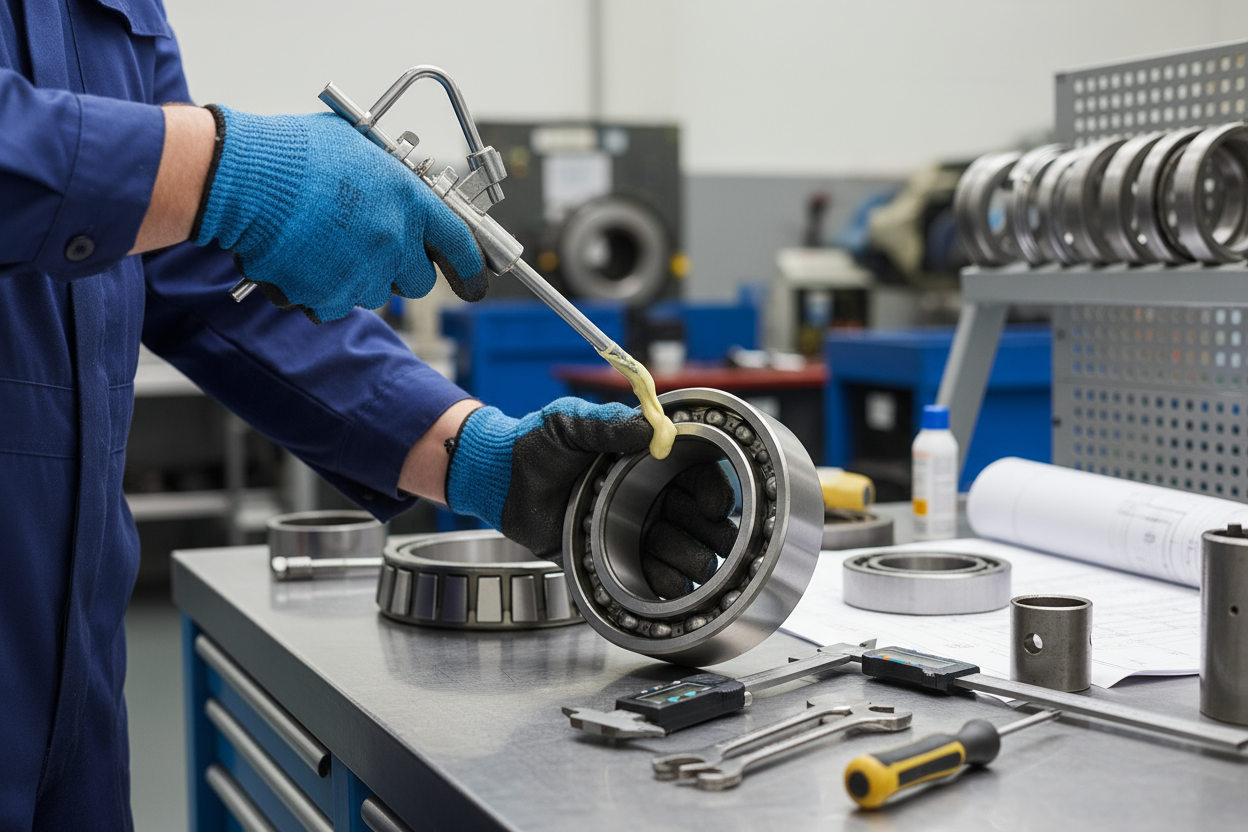
Why Is Bearing Maintenance So Important?
Proper bearing maintenance can:
- Extend bearing service life by 50-200%
- Reduce equipment downtime
- Lower maintenance costs
- Improve equipment operating efficiency
- Prevent losses from unexpected failures
5 Essential Steps for Bearing Maintenance
Step 1: Proper Installation
Bearing service life largely depends on installation quality.
- Maintain Cleanliness - Ensure bearings, shafts, and housings are clean before installation
- Use Proper Tools - Avoid direct hammering; use bearing installation sleeves or hydraulic tools
- Check Fit - Ensure proper fit between bearing, shaft, and housing
- Align Correctly - Avoid tilted installation; ensure bearing is properly seated
Step 2: Adequate Lubrication
Lubrication is the core of bearing maintenance.
Grease Lubrication
- Fill Amount: Generally 30-50% of bearing space
- Replacement Interval: Typically 6-12 months depending on conditions
- Recommended Brands: Shell, Mobil, SKF grease
Oil Lubrication
- Suitable for high-speed or high-temperature applications
- Regularly check oil level and quality
- Recommended Replacement: Every 3-6 months
Note: Sealed bearings (2RS) are pre-filled with grease and require no additional lubrication.
Step 3: Regular Inspection
Establish a regular inspection schedule to detect problems early.
Inspection Items:
- Temperature - Normal operating temperature should be below 80°C; immediate inspection required if exceeding 100°C
- Noise - Abnormal noise may indicate insufficient lubrication or bearing damage
- Vibration - Increased vibration suggests bearing wear or improper installation
- Lubrication Condition - Check if grease has deteriorated or is contaminated
Recommended Inspection Frequency:
- Critical Equipment: Weekly
- General Equipment: Monthly
- Standby Equipment: Quarterly
Step 4: Environmental Protection
Protect bearings from environmental factors.
- Dust Protection - Use sealed bearings or external sealing devices
- Water Protection - Prevent moisture ingress; choose rubber seal (2RS) bearings
- Corrosion Protection - Use stainless steel bearings in humid environments
- Temperature Control - Avoid overheating or excessive cold
Step 5: Timely Replacement
Replace bearings immediately if you notice:
- Persistent increase in abnormal noise or vibration
- Abnormal temperature rise
- Grease discoloration or metal particles present
- Visible cracks, rust, or deformation on bearing surface
- Reaching predetermined service life
Special Maintenance Points for Different Bearing Types
Deep Groove Ball Bearings
Most common type with relatively simple maintenance. Sealed (2RS) types are maintenance-free; open types require regular lubrication.
Angular Contact Ball Bearings
Require high installation precision; strictly control preload to avoid over-tightening or looseness.
Needle Roller Bearings
High lubrication requirements; ensure adequate lubrication to avoid dry friction.
Tapered Roller Bearings
Require regular clearance inspection and adjustment to ensure correct preload.
Common Bearing Failures and Causes
| Failure Symptom | Possible Cause | Solution |
|---|---|---|
| Overheating | Insufficient lubrication, excessive preload, overload | Add lubrication, adjust preload, check load |
| Excessive Noise | Poor lubrication, contamination, wear | Replace grease, clean or replace bearing |
| Vibration | Improper installation, wear, imbalance | Reinstall, replace bearing, balance rotor |
| Premature Failure | Installation error, improper lubrication, contamination | Standardize installation, proper lubrication, improve sealing |
Professional Support
SGU Bearing provides comprehensive technical support:
- Free bearing selection consultation
- Installation guidance and training
- Maintenance plan development
- Failure diagnosis services
- Original quality guarantee
Contact us for professional technical support.
Browse our complete bearing catalog to find high-quality bearings for your needs.